
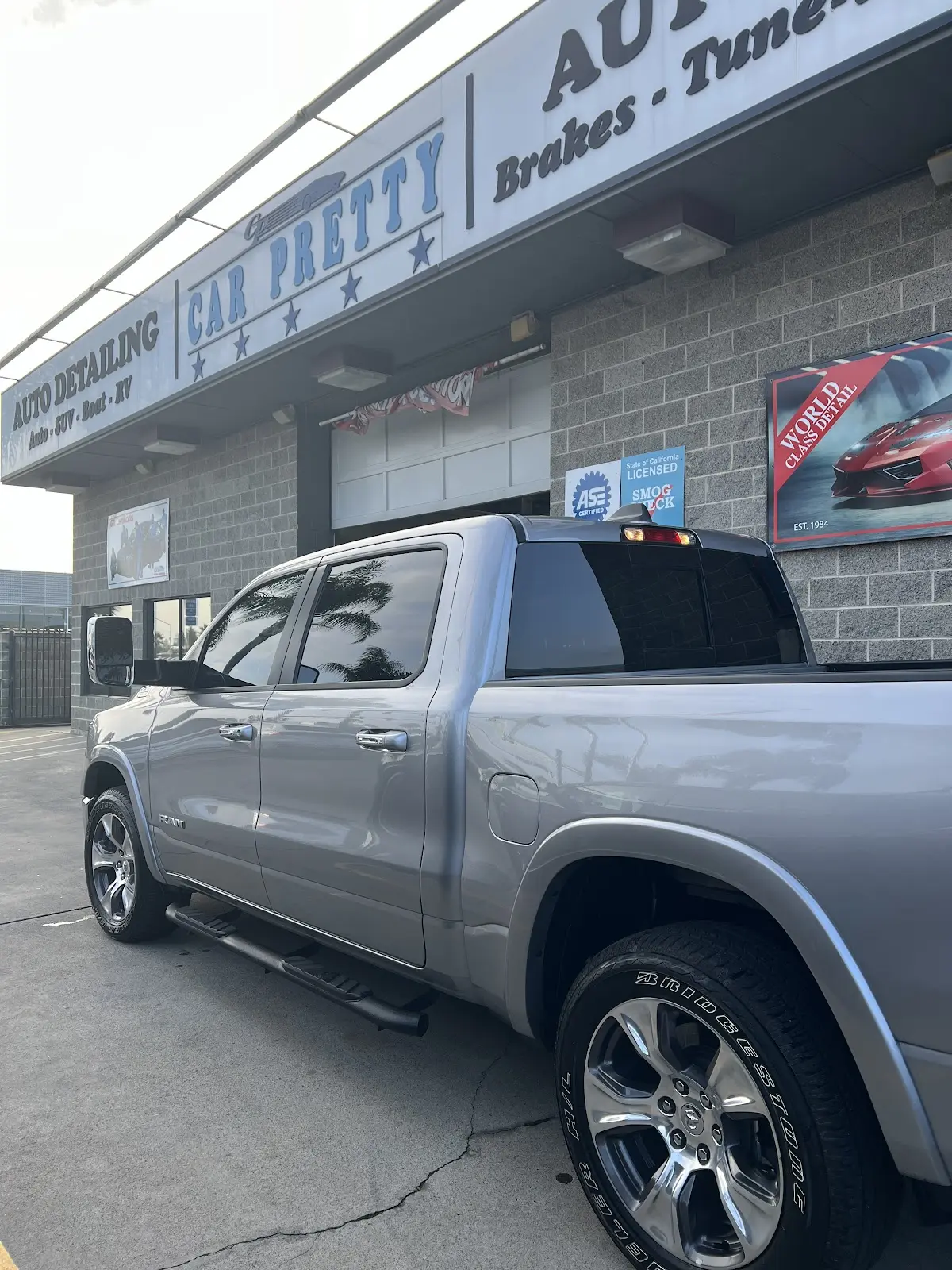
If your registration renewal is due and your car also needs cleaning up, you do not have to make two trips. Car Pretty runs a detailing department and an auto repair and smog department at the same location on McHenry Avenue, so both can be handled in one visit.
That is convenient, but it also takes a little planning to do well. This is what a California smog check is actually looking at, what commonly causes a car to fail, and how to line the two appointments up so the day goes smoothly.
Why California makes you do this
California requires most vehicles to pass a smog inspection periodically as part of registration renewal, and also in certain change-of-ownership situations. The program exists because the state has air quality problems, and the Central Valley has them worse than most places.
The valley is a bowl. Mountains on both sides and long stretches of still air mean whatever goes into the air tends to stay here, which is part of why summer air quality alerts are routine around Modesto. The inspection program is one of the tools aimed at that.
Whatever you think of the program, it is a fixed part of owning a car here, and the way to make it painless is to not be surprised by it.
What the inspection is actually checking
A modern smog check is largely a conversation with your car's computer. The technician connects to the onboard diagnostics system and reads what the car knows about itself.
There is a visual inspection of the emissions equipment to confirm that the required components are present and connected and that nothing has been removed or tampered with. There is a functional check that includes the check engine light and, on many vehicles, the gas cap and evaporative system.
And there is the readiness monitor check, which is where a lot of people get tripped up. The car runs self-tests on its own emissions systems as you drive, and those tests have to have completed for the inspection to proceed.
The most common reasons a car does not pass
An illuminated check engine light is the big one. If that light is on, the inspection does not go well regardless of how the car feels to drive. The light means the computer has stored a fault, and that fault has to be addressed first.
Not-ready monitors are the second. This usually happens after the battery has been disconnected or trouble codes have been cleared recently. The car's memory has been wiped, the self-tests have not finished running, and it needs normal mixed driving before it will report ready.
A loose or failed gas cap, a cracked vacuum hose, aging oxygen sensors, and neglected basic maintenance round out the usual list. Most of these are small parts with outsized influence on the result.
How to prepare before you come in
Do not clear codes and drive straight over. If the light has been on and something was recently repaired or the battery was replaced, drive the car normally for a while first so the monitors can set.
Warm the car up. A vehicle that has been driven for a bit before the appointment is in a more normal operating state than one that was started cold in the parking lot.
Bring your renewal notice if you have it. Make sure the gas cap is on tight and not cracked. And if the check engine light is on, say so when you book rather than hoping for the best, because that changes what the visit is about.
What happens if it does not pass
A failed inspection is a diagnostic starting point, not a dead end. The report tells you which system reported a problem, and from there the job is finding the actual cause rather than swapping parts and hoping.
Having the repair department in the same place as the inspection helps here, because the information does not have to be carried between two businesses. The people who saw the result are the people who can look at the car.
Once the repair is done, the car generally needs to be driven so the monitors can reset before it is retested. Plan for that rather than expecting to turn around the same hour.
Stacking the detail with the inspection
This is the part that makes the trip worth it. Your car is already at the shop and you have already arranged a ride or a gap in your day, so adding the detailing work you have been putting off costs you no additional trip.
It works in either order. Some people like the inspection first so they know what they are dealing with. Others prefer to drop the car for the detail and have the smog handled while it is on the lot.
It is also a natural moment to deal with the things you notice but never get around to: the hazy headlights, the interior that has not been shampooed in years, the wheel that met a curb. Ask about them when you book so the day is planned around the real list.
Planning the day
Book with the whole picture in mind. Tell them the car, tell them the inspection is due, and tell them what you want done cosmetically. That lets the shop schedule both departments instead of discovering the second half after you arrive.
Clear personal items out of the car before you come. It speeds the interior work considerably and it means nothing important is moved.
The shop is open Monday–Friday, 7:00 AM to 4:00 PM, so an early drop-off gives the day the most room. If your registration deadline is close, book earlier rather than later, because a failed inspection needs repair time and a retest.
One address, both jobs
The advantage of a location that does both is simple: fewer trips, one conversation, and one place that knows what your car has had done to it.
Car Pretty is at 4207 McHenry Ave, Modesto, CA 95356, with more than 35 years of experience behind the work. Call (209) 526-8688 to line up a smog check and a detail on the same visit.
Come in with a realistic list and a little lead time on your renewal, and what would have been two errands becomes one.