
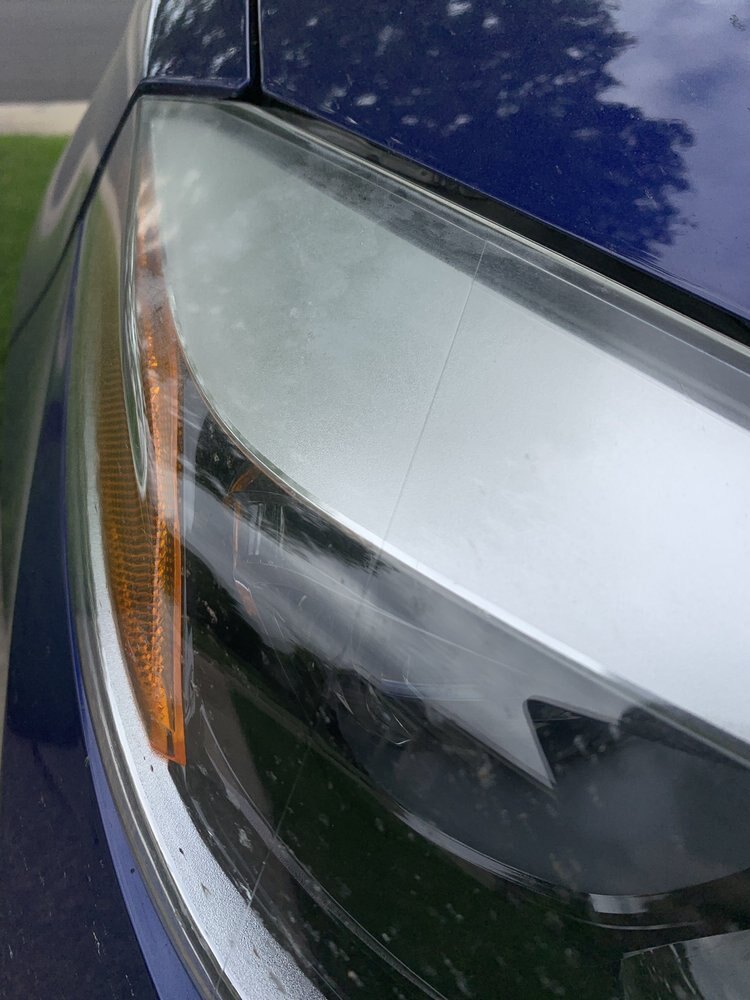
Your Modesto commute is moving into the dark and the headlights have gone yellow. You are deciding whether to pay for restoration or replace the housings, and the answer depends on where the damage actually is.
Surface oxidation can often be sanded, polished and protected; cracks, internal fogging or damaged reflectors cannot be fixed by polishing the outside. Have the lenses inspected before choosing either path.
Why the timing matters
Through summer, most commutes happen in daylight, so hazy headlights barely register. When the time changes, the same drive home happens after sunset, and in winter it often happens in rain or fog.
Suddenly the headlights are doing real work every day. That is when people notice that the road looks dim, that signs are hard to read until they are close, and that oncoming cars seem to produce more glare than they used to.
Getting the lenses cleared before that change means you are not squinting through the first dark weeks of the season.
What turns headlights yellow
Almost every modern headlight lens is made of polycarbonate plastic. It is tough and light, but it breaks down under ultraviolet light, so the factory coats it with a protective hard layer.
In the Valley, long summers of strong sun wear through that coating. Once it is gone, the plastic itself starts to oxidize. It yellows, turns cloudy and develops a rough, chalky surface.
Road grit, harsh cleaners and automatic car wash brushes speed the process up by wearing the surface further. Cars that park outside every day usually show it first.
How to tell how bad yours are
Look at the lenses in daylight from a few feet away, then up close. A light haze across the surface is early oxidation. A deep yellow color with a rough texture you can feel with a fingertip is advanced oxidation, but it is still usually on the outside.
Then look inside. Water droplets or fog trapped behind the lens, a reflector that looks flaky or burnt, or cracks in the plastic are signs of problems restoration cannot reach.
Most cars fall into the first group: the damage is on the outer surface, and restoration is exactly the right fix.
If the haze looks external, request Headlight Restoration or call (209) 526-8688 to discuss the lens condition. Bring up any moisture inside the housing before booking.
Explore Headlight Restoration for Modesto drivers.
What proper restoration involves
Real restoration removes the damaged layer rather than hiding it. The lens is carefully masked so the paint around it is protected, then the oxidized plastic is sanded away in stages, each finer than the last, until the surface is uniform.
The lens is then polished back to optical clarity, so light passes straight through instead of scattering.
The last step matters most. Bare plastic that has just been polished will start to oxidize again in the Valley sun if it is left unprotected, so a protective layer goes back on to replace what the factory coating used to do.
Will the result last, and who protects the paint nearby?
Polishing without a protective finish leaves the lens exposed to the same Valley sun that clouded it before. Ask what finishing protection is included and how the paint around the lens will be masked. No honest assessment can promise a fixed lifespan; parking and care afterward matter.
Why the quick fixes disappoint
You will hear about toothpaste, bug spray and other home tricks. Some of them make a lens look clearer for a short time because they fill in the rough surface or leave a shiny residue.
None of them remove the oxidized layer or put protection back, so the haze returns. Some solvents can actually damage the plastic further.
If the lenses are worth clearing, they are worth clearing properly so the result holds up.
It improves more than the light
Yellow headlights make an otherwise clean car look old. Clearing them is one of the most visible changes you can make to the front of a car, which is why it also comes up so often when people are getting a car ready to sell.
But the reason to do it before the dark evenings is simple: you will see more of the road, and other drivers will see you.
Keeping them clear afterward
Park in shade or a garage when you can, avoid harsh cleaners on the lenses, and wash them gently like you would the paint. If the lenses start to look hazy again, deal with it early rather than waiting for them to go fully yellow.
Ready to talk about your car?
Want a clearer view of the road? Request an appointment at CAR PRETTY or call (209) 526-8688 to ask whether your lenses are candidates for restoration.
You can also read real Modesto customers’ reviews on Google and look through CAR PRETTY’s real vehicle photos before deciding who handles your car. See customer reviews and shop photos.
Read about Headlight Restoration and visiting from Modesto.