
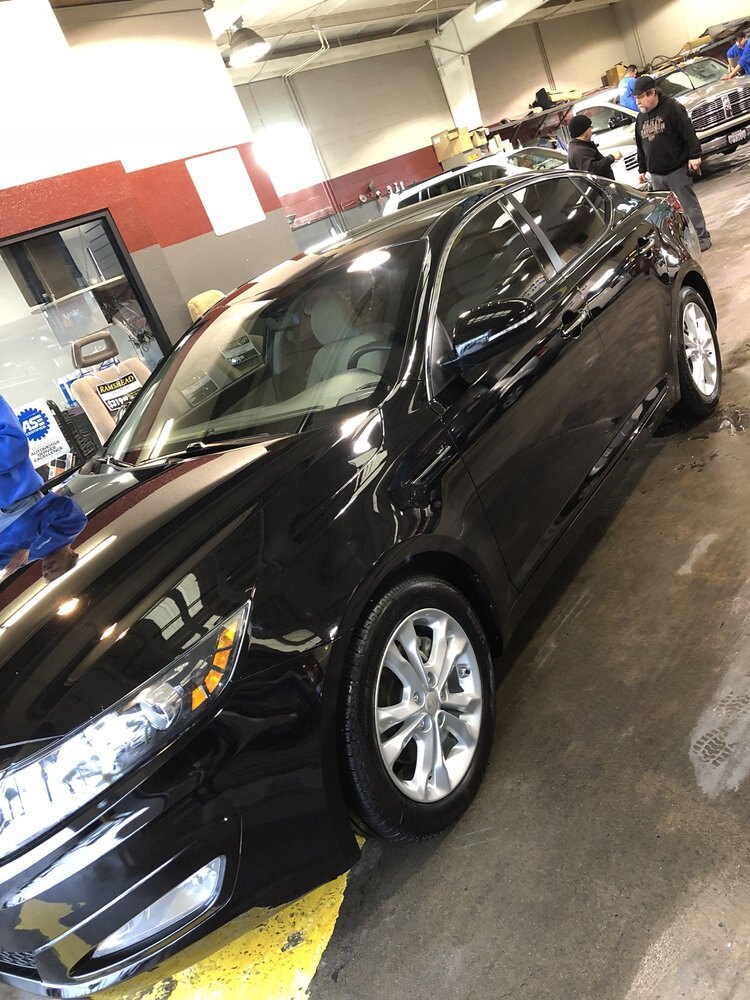
Your car came home from Modesto’s first rain with greasy spray across the doors and wheels, and you are deciding whether a drive-through wash is enough. If the paint still feels gritty or the glass smears after a rinse, a careful hand wash is a better starting point than scrubbing harder.
A wash can remove loose film; a detail becomes worth considering when contamination has bonded or the interior also needs attention. You do not have to buy work the car does not need: ask someone to look at it first.
Why the first storm is different
Through a Valley summer, nothing washes the roads. Every car that passes drips a little oil, sheds a little tire rubber and puts down a little brake dust. Trucks carry dirt off farm roads onto McHenry, Highway 99 and every surface street in town. All of it sits there and bakes.
When the first rain arrives, that residue floats up out of the pavement. It is why roads feel slick during the first storm, and it is why the spray coming off the car ahead of you looks brown and greasy rather than clean.
Later rains are cleaner, because the road has already been flushed. The first one is the one that coats your car.
What ends up on your paint
Look at the lower half of the car after the first wet drive: the rocker panels, the back of the bumpers, the lower doors and the area behind each wheel. You will usually see a brownish, slightly oily film that does not wipe away cleanly with water.
That film is a mix of road oil, tar specks, rubber and fine grit. Mixed in is brake dust, which is made partly of metal particles and clings to wheels and lower paint. On a light-colored car it shows as a grey haze. On a dark car it shows as a dull, speckled finish once it dries.
The glass collects its own version of the same film, which is why your wipers can smear on the second day of a storm even when they were fine on the first.
Why you should not just let the next rain rinse it
It is tempting to let the next storm wash the car for free. The problem is that rain water is not a cleaner. It moves the film around and then evaporates, leaving the oily residue and whatever minerals were in the water behind.
In between storms the Valley sun still comes out. Oily grime that dries and heats on the paint bonds harder each time, and brake dust sitting on wheels can stain the finish if it stays there long enough.
The longer that first-storm film stays on, the more work it takes to get off, and the more likely someone ends up scrubbing it, which is how paint gets scratched.
If the first-rain film will not rinse away, book a wash assessment at CAR PRETTY or call (209) 526-8688. Ask whether Hand Wash is enough before deciding on more work.
Explore Hand Wash for Modesto drivers.
How to wash it off without scratching
Start with the wheels and the lower panels, because that is where the heaviest, grittiest contamination sits. Rinse thoroughly before anything touches the paint, so the loose grit is flushed away rather than dragged across the surface.
Use a proper car wash soap rather than dish soap, and a clean wash mitt rather than a sponge or a brush. Work from the top of the car down, so the dirtiest lower sections are washed last and do not contaminate the mitt before it touches the roof and hood.
Rinse the mitt often, and if you drop it on the ground, stop and swap it for a clean one. Dry with clean, soft towels rather than letting the car air dry, especially if your water is hard.
Tar specks on the lower panels will not come off with soap. They need a product made for tar, applied gently. Scrubbing them with a mitt just smears them and scratches the paint around them.
Will a wash be enough, and will the paint be treated carefully?
If the film is loose and the finish feels smooth after a thorough rinse, a careful hand wash may be enough. A drive-through brush wash can drag grit across paint; ask how your vehicle will be rinsed and handled. If grime is bonded, ask whether decontamination is appropriate rather than paying for another pass through the wash.
Automatic washes and the first storm
A quick drive through a brush wash after the first rain is the worst combination for your paint. The brushes pick up grit from the lower panels of every car before yours and drag it across your clear coat.
If you want the film off without adding swirl marks, a hand wash where someone rinses first, works top down and uses clean mitts is the safer way to do it.
Do not forget the glass and the wipers
Road film on the windshield is a safety issue during the rainy season, not a cosmetic one. A filmy windshield scatters oncoming headlights at night and smears when the wipers run.
Clean the glass properly after the first storm, including the top edge of the windshield and the wiper blades themselves. Wiping the rubber edge with a damp cloth removes the grit that causes streaks, and it tells you whether the blades have hardened over the summer.
Protection makes the rest of the season easier
Paint that has a layer of protection on it lets road film release with far less effort. The grime sits on top of the protection rather than gripping the clear coat, so the next wash takes less contact and less scrubbing.
If your car went through the whole summer without protection, the start of the rainy season is a good moment to get it clean, smooth and protected so the storms that follow do less harm.
Ready to talk about your car?
Ready to get the first-storm film off? Request an appointment or call (209) 526-8688 with your vehicle and the areas that still feel gritty.