
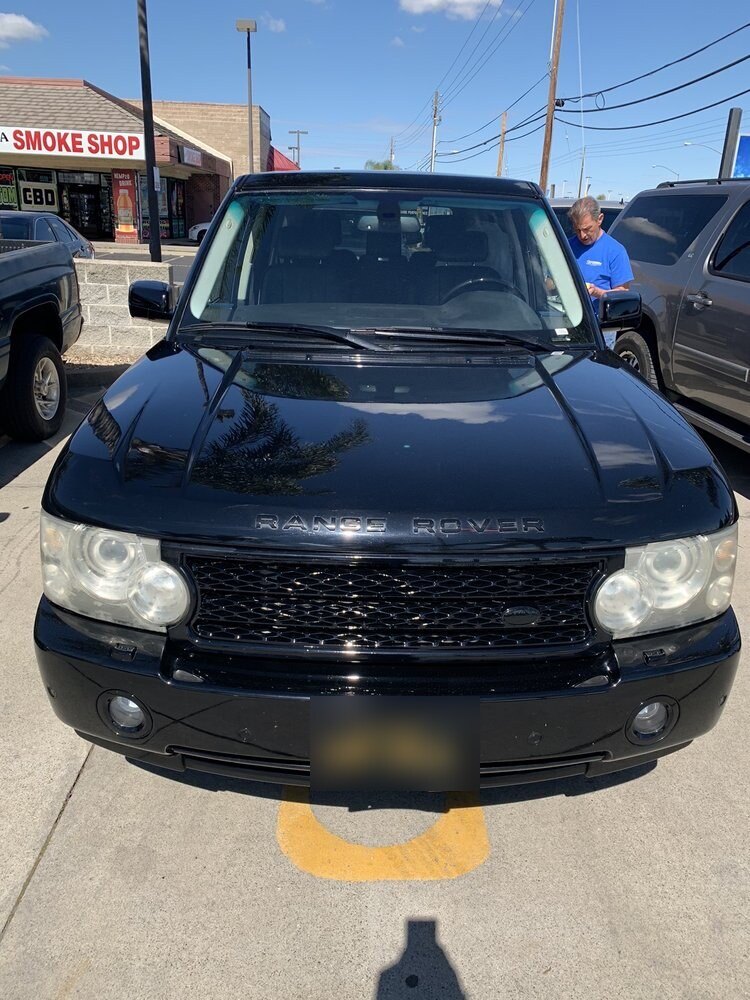
If you park anywhere near an orchard around Modesto, a wash does not get your paint clean. The film that settles on valley cars during ag season is not loose dust sitting on top of the clear coat, it is fine mineral grit mixed with spray residue and hard water minerals that bonds to the surface.
That is why a car can come out of a wash looking clean and still feel rough when you run your hand over the hood. Removing that layer is a different process from washing, and understanding the difference is what keeps valley paint from aging early.
What is actually landing on your car
Start with the dirt itself. Valley soil is fine and it gets airborne easily, and during harvest the shakers, sweepers, and haulers in the almond orchards put enormous volumes of it into the air. It drifts well past the orchard edge and settles on everything.
Then add what else is in the air at different points in the season: dust off unpaved farm roads, residue from orchard sprays, diesel soot from equipment and from the highway corridors, and the pollen that coats everything in spring.
Then add the water. Much of the water around here is hard, so every sprinkler that reaches your car, every rinse that dries in the sun, and every morning of dew leaves behind dissolved minerals when the water evaporates.
Why a rinse leaves the problem behind
Washing removes what is loose. It does not remove what has bonded. Fine mineral particles work into the microscopic texture of the clear coat and stay there, and water spots are mineral deposits that were left after the liquid evaporated.
There is a simple test. After washing and drying the car, put your hand in a thin plastic bag and run it lightly across the paint. If it feels like fine sandpaper instead of glass, there is bonded contamination on the surface. Almost every valley car that has not been decontaminated recently fails this test.
That rough surface is not just a texture issue. It holds more dirt, it makes the next wash less effective, and it scatters light so the paint looks flat even when it is clean.
The damage happens when you wash it wrong
Here is the part that surprises people: most of the visible damage on valley paint is not caused by the dust. It is caused by the dust being dragged across the paint.
Every gritty particle that a sponge, a towel, or an automatic wash brush pushes across your clear coat leaves a fine scratch. Thousands of those scratches are what swirl marks are. On a dark car they show as a spiderweb in direct sun and they are the main reason an older dark car looks dull.
This is why dry wiping a dusty car is the single worst habit in this climate, and why washing in the wrong order, with one dirty bucket, or in full sun on a hot panel does lasting harm.
Heat makes everything more urgent
Valley summers are long and intense, and a dark hood parked in the sun gets much hotter than the air temperature. Heat accelerates every chemical process happening on the surface.
Bird droppings and bug residue are the clearest example. Both are acidic, and on a hot panel they can etch into the clear coat in a surprisingly short time. What would have wiped away in the morning becomes a permanent outline by the afternoon.
Sap is the same story near trees. Once it heats and hardens, it stops being a spot and becomes a bonded deposit that needs to be dissolved rather than scrubbed.
What actually removes bonded contamination
This is what a proper detail does that a wash does not. After the car is washed, the surface is chemically treated to dissolve iron and mineral deposits, then mechanically decontaminated to lift out whatever is still embedded in the clear coat.
After that the paint is smooth again, which is the prerequisite for everything else. You cannot correctly polish a contaminated surface and you cannot properly protect one, because anything you apply just sits on top of the grit.
If the clear coat has also been scratched up by past washing, machine polishing is what removes those fine scratches and brings the reflection back. That is a separate step from cleaning, and on a neglected valley car it is usually where the dramatic change comes from.
Protection is what buys you time
Once the paint is clean and smooth, protecting it is what keeps it that way. A protected surface is slicker, so dust and mineral deposits have less to grip, and the next wash lifts more with less effort and less contact.
That matters more here than the shine does. Less scrubbing is less scratching, and less scratching is the actual long game for paint that has to live under valley sun and valley dust.
How often you should renew protection depends on where you park, how much you drive, and whether your car sits under sprinklers. That is a conversation worth having about your specific car rather than following a generic schedule.
Habits that help between details
Never wipe a dusty car dry. If you need to remove dust between washes, do it with plenty of water or a proper waterless product and a clean towel, not a dry rag.
Deal with bird droppings, bug hits, and sap the day you see them rather than waiting for the weekend, especially in summer.
Aim the sprinklers away from where you park, or move where you park. Overspray from irrigation is one of the most common causes of stubborn spotting on valley cars, and it is also one of the easiest to avoid.
Wash in the shade or early in the morning, and keep your wash water clean. Small changes in method make a large difference over years.
Where to start if your paint already feels rough
If the bag test comes back rough, the answer is not another wash. It is a decontamination and detail, and possibly polishing if the clear coat has been scratched.
The shop at 4207 McHenry Ave sees valley cars every day and knows what harvest season leaves behind. Pricing is posted at the shop, and the team is there from Monday–Friday, 7:00 AM to 4:00 PM.
Call (209) 526-8688 or stop by and have someone look at the paint in the sun. Living in ag country does not have to mean your car ages faster than it should.